Emergency Fund Calculator: How Much Savings Do You Actually Need?
Financial advisors universally agree on one thing: build an emergency fund before investing, before paying extra on debt, before anything else. But how much is enough? The generic answer is "3-6 months of expenses" — which is both right and useless without context.
The right emergency fund size depends on your income stability, family size, fixed expenses, and risk tolerance. Use our Savings Goal Calculator to figure out how long it'll take to reach your target.
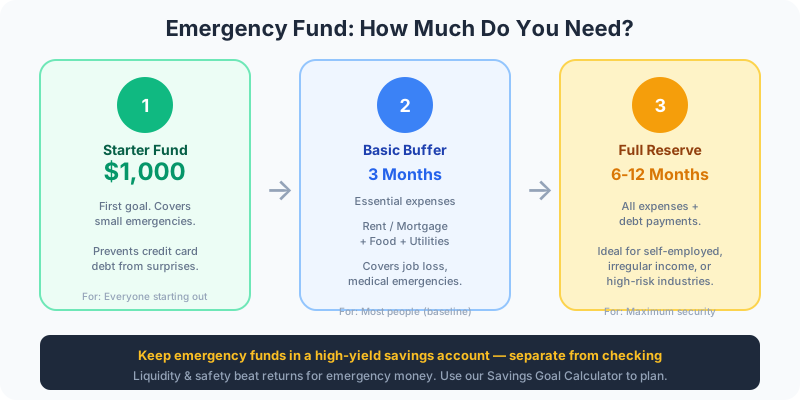
The Three Tiers of Emergency Savings
Think of your emergency fund in three progressive tiers. You don't need to jump straight to 6 months — you build up over time.
| Tier | Target | Who It's For | What It Covers |
|---|---|---|---|
| Starter Fund | $1,000-2,000 | Everyone, especially people in debt | Small emergencies: car repair, dental work, appliance failure |
| Basic Buffer | 3 months of essential expenses | Most people with stable jobs | Job loss, extended medical issue, major car repair |
| Full Reserve | 6-12 months of total expenses | Self-employed, variable income, high-risk industries | Extended unemployment, business downturn, family crisis |
Calculating Your Personal Emergency Fund Target
Start by adding up your **essential monthly expenses** — the costs you'd have to cover if your income dropped to zero tomorrow:
- **Housing** — Rent or mortgage payment (including PMI)
- **Utilities** — Electricity, gas, water, internet, phone
- **Food** — Groceries only (not dining out)
- **Transportation** — Car payment, gas, insurance, or public transit
- **Insurance** — Health, disability, life (if paid monthly)
- **Minimum debt payments** — Student loans, credit card minimums
- **Childcare / dependents** — Daycare, tutoring, medical
Example: Your essential expenses total $4,200/month. Your emergency fund targets are:
| Tier | Target Amount | How to Get There |
|---|---|---|
| Starter Fund | $2,000 | Save $200/month → 10 months |
| Basic Buffer (3 months) | $12,600 | Save $400/month → 26 more months |
| Full Reserve (6 months) | $25,200 | Save $500/month → 31 more months |
Use our Savings Goal Calculator to model different savings rates and timelines.
When to Increase Your Target Beyond 6 Months
- **Self-employed or commission-based income** — Your income fluctuates, so your buffer needs to be bigger. Aim for 9-12 months.
- **Single income with dependents** — You're the only safety net. 6-9 months is the sweet spot.
- **Work in a volatile industry** — Tech, government contracting, or seasonal work means layoffs come faster. Budget for 6+ months.
- **Pre-existing medical conditions** — Unexpected health costs are more likely. Build a cushion that covers deductibles and copays.
- **Live in a high-cost area** — Expenses are higher, so the absolute number needs to be bigger.
Where to Keep Your Emergency Fund
Your emergency fund has one job: be there when you need it. That means **liquidity and safety beat returns** every time. Here's the ideal setup:
- **High-yield savings account** — Currently earning 4-5% APY. Fully liquid, FDIC-insured, separate from your checking account.
- **Money market account** — Similar rates, slightly more features. Good if you want check-writing ability.
- **NOT in the stock market** — Your emergency fund is not an investment. A market crash is likely to coincide with a job loss — the worst possible time to sell at a loss.
- **NOT in a CD** — Early withdrawal penalties defeat the purpose of emergency money.
Emergency Fund vs Other Financial Priorities
Here's the order of operations most financial advisors recommend:
| Priority | Action | Why First? |
|---|---|---|
| 1 | Build starter fund ($1,000-2,000) | Prevents new debt from the next surprise |
| 2 | Capture employer 401(k) match | Instant 100% return on your contribution |
| 3 | Pay off high-interest debt (>8% APR) | Guaranteed return equal to your interest rate |
| 4 | Build full emergency fund (3-6 months) | Covers major income disruption |
| 5 | Invest for retirement (max out tax-advantaged accounts) | Compound growth over decades |
| 6 | Pay off remaining debt / invest extra | Financial freedom and wealth building |
What Counts as a Valid Emergency?
A surprising number of people dip into their emergency funds for non-emergencies. Here's the bright line:
- **Emergencies (use the fund):** Job loss, medical emergency, car breakdown, home repair, family crisis, unexpected eviction notice.
- **Not emergencies (don't use the fund):** Holiday gifts, sales, dining out, subscription services, planned vacations, upgrading your phone.
If you can plan for it, it's not an emergency — it's a budget item. Set up a separate sinking fund for annual expenses (insurance, holidays, car maintenance) and treat them as monthly savings goals.
Related Calculators on ParseAtlas
- Savings Goal Calculator — How long to reach your emergency fund target
- Net Worth Calculator — Track your overall financial picture
- Budget Calculator — Map your essential vs discretionary expenses
- Compound Interest Calculator — See how your emergency fund grows even in a savings account
An emergency fund isn't exciting. It sits in a savings account earning modest interest while your investments grow faster elsewhere. But it's the difference between a setback and a catastrophe. Build it first, build it right, and then invest everything else with confidence.