Heart Rate Zones: The Complete Guide to Training Smarter
Running hard every workout feels productive, but it's not optimal. Heart rate zone training splits your effort into five distinct ranges, each triggering a different physiological adaptation. Train in the right zone for your goal and you'll improve faster — with less wasted effort.
Our Heart Rate Zone Calculator gives you personalized zones based on your age and maximum heart rate. Here's what each zone means and how to use it.
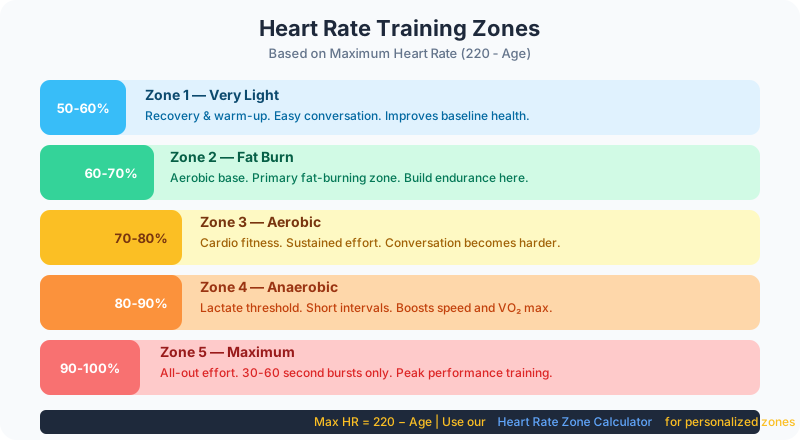
The 5 Heart Rate Training Zones
| Zone | % of Max HR | Feeling | Training Benefit |
|---|---|---|---|
| Zone 1 — Very Light | 50-60% | Very easy, deep breathing | Warm-up, recovery, baseline circulation |
| Zone 2 — Fat Burn | 60-70% | Easy, can hold conversation | Builds aerobic base, trains fat metabolism |
| Zone 3 — Aerobic | 70-80% | Moderate, sentence-length speech | Improves cardiovascular fitness, efficiency |
| Zone 4 — Anaerobic | 80-90% | Hard, few words at a time | Raises lactate threshold, boosts VO₂ max |
| Zone 5 — Maximum | 90-100% | Maximum effort, gasping | Peak performance, neural recruitment, speed |
How Maximum Heart Rate Is Calculated
The most common formula is **220 − age = estimated max heart rate.** It's a starting point, not gospel. Actual max HR varies widely between individuals of the same age.
Example: A 35-year-old has an estimated max HR of 185 bpm. Their zones are:
| Zone | Heart Rate (bpm) | Training Use |
|---|---|---|
| Zone 1 | 93-111 | Recovery runs, easy cycling |
| Zone 2 | 111-130 | Long slow distance, base building |
| Zone 3 | 130-148 | Tempo runs, group rides |
| Zone 4 | 148-167 | Interval training, threshold work |
| Zone 5 | 167-185 | Sprints, hill repeats, race pace |
Use our Heart Rate Zone Calculator to get your exact zones.
Zone 2: The Underrated Foundation
Most recreational athletes spend too little time in Zone 2 and too much time in Zone 3 (the "grey zone" — too hard to be easy, too easy to be hard). This is a mistake.
Zone 2 training builds mitochondrial density, trains your body to burn fat as fuel, and develops the capillary network that delivers oxygen to muscles. Elite endurance athletes spend 80% of their training time in Zones 1-2.
**The talk test:** If you can't hold a full conversation during your run, you're above Zone 2. Slow down. This is the hardest thing for most athletes to do.
Zone 4: Where Speed Is Built
Zone 4 is where your lactate threshold lives — the point at which lactic acid builds faster than your body can clear it. Training here raises that threshold, meaning you can go faster before fatigue hits.
Effective Zone 4 training uses intervals: 3-5 minute efforts at threshold pace, followed by equal recovery. Four x 5-minute intervals at Zone 4 pace is a classic threshold workout.
Sample Training Splits by Goal
| Goal | Zone 1-2 | Zone 3 | Zone 4-5 |
|---|---|---|---|
| Marathon / Endurance | 80% | 10% | 10% |
| Half Marathon | 65% | 15% | 20% |
| 10K / 5K | 50% | 20% | 30% |
| General Fitness | 60% | 25% | 15% |
| Weight Loss | 70% | 20% | 10% |
Heart Rate Monitors: Do You Need One?
- **Chest strap monitors** — The gold standard. Measure electrical signals from your heart directly. Accurate within 1-2 bpm.
- **Wrist optical monitors** — Good enough for zone training. Can drift during high-intensity intervals but fine for steady-state.
- **Manual pulse check** — Pinch your carotid artery for 15 seconds, multiply by 4. Works if you're disciplined about stopping briefly.
Related Calculators on ParseAtlas
- Heart Rate Zone Calculator — Personalized training zones by age
- TDEE Calculator — Daily calorie needs based on activity level
- Calorie Burn Calculator — Calories burned by exercise type and duration
- BMI Calculator — Weight screening tool
- Body Fat Calculator — Body composition estimate
Training smarter means training in the right zone for the right reason. Easy days easy. Hard days hard. No more grey zone plodding. Calculate your zones, pick a plan, and trust the process.